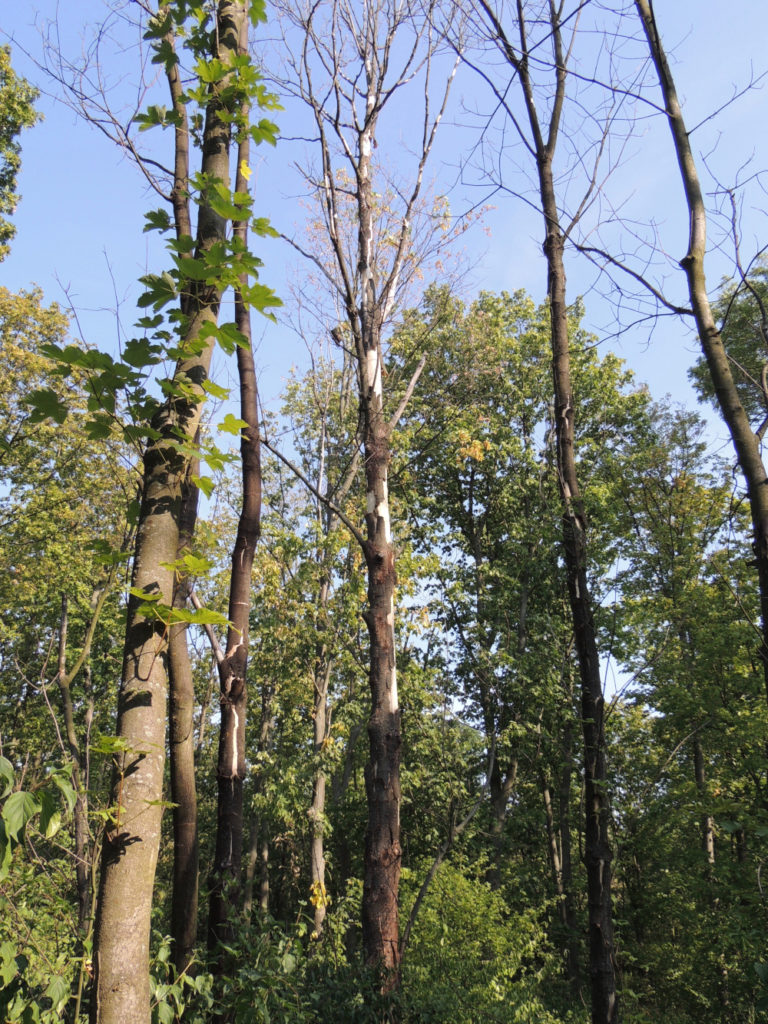
Fir, pine, maple and oak have a high tolerance to heat and drought. Nevertheless, there is currently an increased occurrence of a number of pests and pathogens on these "tree species of the future". In the "CLIFF" project, knowledge about these organisms is to be expanded.
The BML commissioned a consortium with the participation of the Austrian Research Center of Forests (BFW) with the project "FORSITE II - Development of the ecological basis for a dynamic forest typing in Upper Austria, Lower Austria and Burgenland".
In this policy brief we propose measures to maintain the forest carbon sink strength and provide information for the time horizons for achieving the targets
Climate change is likely to alter the future growth capacity of European forests in providing vital ecosystem services. Adaptive management aiming at reducing vulnerability and enhancing the resilience of forest ecosystems is a key to preserve the potential of forests.
Pause for a moment and think about what type of landscape the terms “nature” or “naturalness” evokein you. It’s quite possible that a forest will appear in front of your mind’s eye. The forest is likeable and, one could argue, constitutes a complex backdrop. It is made of numerous spatial and temporal planes that are […]
Gene conservation forests are the instrument for in situ gene conservation of forest genetic resources in Austria.
A better monitoring of Europe’s forest will help countries mitigate and adapt to climate change.
The use of non-native tree species polarise the opinions of experts and citizens. Adaption to climate change versus invasiveness are factors to be considered in the future management of forests and urban tree populations.
In-flow data with high precision in real avalanche scenarios are the product of the cooperative project of BFW Institute for Natural Hazards Innsbruck, TU Berlin and University of Innsbruck. This approach is now being applied for the first time to snow avalanches. The destructive potential of gravitational mass flows, such as snow avalanches, has a […]
In order to counteract the rapid climate change in the Austro-Hungarian border region in practice, as part of the INTERREG project REIN-Forest , regional guidelines for forest reproductive material (FRM) transfer is going to be developed. Reforestation of six demonstration sites is planned with local and with adapted to the future climate FRM of two native tree species, European beech and sessile oak.
The forests of Central Europe provide a diverse range of ecosystem services, including carbon sequestration, protective functions, biodiversity support, and job creation, while also serving as cost-effective measures for climate protection. However, the effects of climate change are increasingly threatening forest ecosystems and presenting them with major challenges in terms of adapting to changing climatic conditions and protecting biodiversity.
Microsoft will no longer support Internet Explorer. Therefore please download a modern browser to view the BFW website.