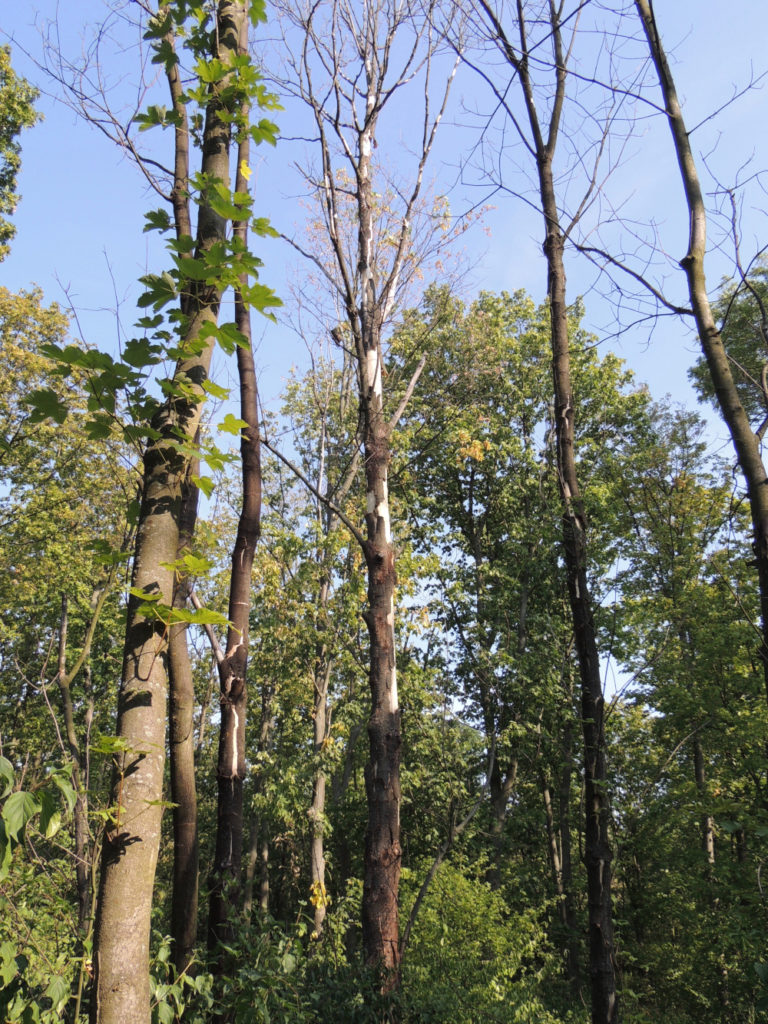
Fir, pine, maple and oak have a high tolerance to heat and drought. Nevertheless, there is currently an increased occurrence of a number of pests and pathogens on these "tree species of the future". In the "CLIFF" project, knowledge about these organisms is to be expanded.
The BML commissioned a consortium with the participation of the Austrian Research Center of Forests (BFW) with the project "FORSITE II - Development of the ecological basis for a dynamic forest typing in Upper Austria, Lower Austria and Burgenland".
In this policy brief we propose measures to maintain the forest carbon sink strength and provide information for the time horizons for achieving the targets
Climate change is likely to alter the future growth capacity of European forests in providing vital ecosystem services. Adaptive management aiming at reducing vulnerability and enhancing the resilience of forest ecosystems is a key to preserve the potential of forests.
Pause for a moment and think about what type of landscape the terms “nature” or “naturalness” evokein you. It’s quite possible that a forest will appear in front of your mind’s eye. The forest is likeable and, one could argue, constitutes a complex backdrop. It is made of numerous spatial and temporal planes that are […]
In the BFW Experimental Garden Tulln, meticulous techniques are used to produce plants for the conservation and breeding of climate tolerant, rare and site specific tree species.
20 years of natural forest reserves, 195 natural forest reserves over a total area of 8403 ha – almost the size of a national park. Research in natural forest reserves is long-term research. This costs time and resources. And the long-standing observation plots are already bearing fruit. The Austrian Natural Forest Reserves Programme was initiated […]
CHEERS is a European project concerning the protection of cultural heritage exposed to environmental risks (natural disasters, climate change, etc.).
Ecological processes in floodplains and their impact on greenhouse gas fluxes are still to be discovered. BFW therefore investigates the dynamic ecosystems in the Austrian Danube National Park.
Vienna, Oktober 2019: The effects of the global climate change impact the Austrian forest. This will influence the contribution of the forest to climate protection. With the rising average temperature, the carbon storage capacity decreases. Necessary adaptations affect the economic yields from the raw material timber. The less wood is used as replacement for non-renewable […]
Microsoft will no longer support Internet Explorer. Therefore please download a modern browser to view the BFW website.